Having survived the tick over at midnight from 31/12/1999 into a new millennium (remember all the hype around the Y2K bug), LSC was looking very much to the future.
The late 1990’s had been about the dawn and then rise of the internet. Having clicked into the 2000’s, it was clear that computerised, micro-controlled and software enabled changes were coming to all aspects of life.
We’d seen locksmiths eagerly adopt electronics in automotive locksmithing from the launch of the first RW100 machine in 1995 when Silca foresaw the future megatrend in automotive locksmithing. Those machines helped us transform our industry decades ahead of that in other countries, many of whom didn’t embrace the new technology and lost market share and industry skill.
In July 2000 I returned from an America trip inspired, and sharing news that locksmiths over there were getting into “Electronic Security”. While we’d sold electric strikes since the 1980’s, there wasn’t a focus within the suppliers or the industry, that would soon change.
There was an end-user industry ahead of the time and it was hotels. Locksmiths had often been asked to install Unican or Vingcard hotel locks. These were popular from the late 1980’s and until recent times. The benefits of using electronics to control access was clear to us, and the news was soon spreading.
LSC seriously started looking for products our customers could offer from the early 2000’s.
Dabbling in Electronic Security was pretty specialised, but local producers like CS-Technologies which was formed in 1987 helped interested customers get into the business. CS-Technologies were innovative, made quality products and were ahead of the pack. They featured on ABC’s Beyond 2000 show in 1996 with a segment showing their i-button.
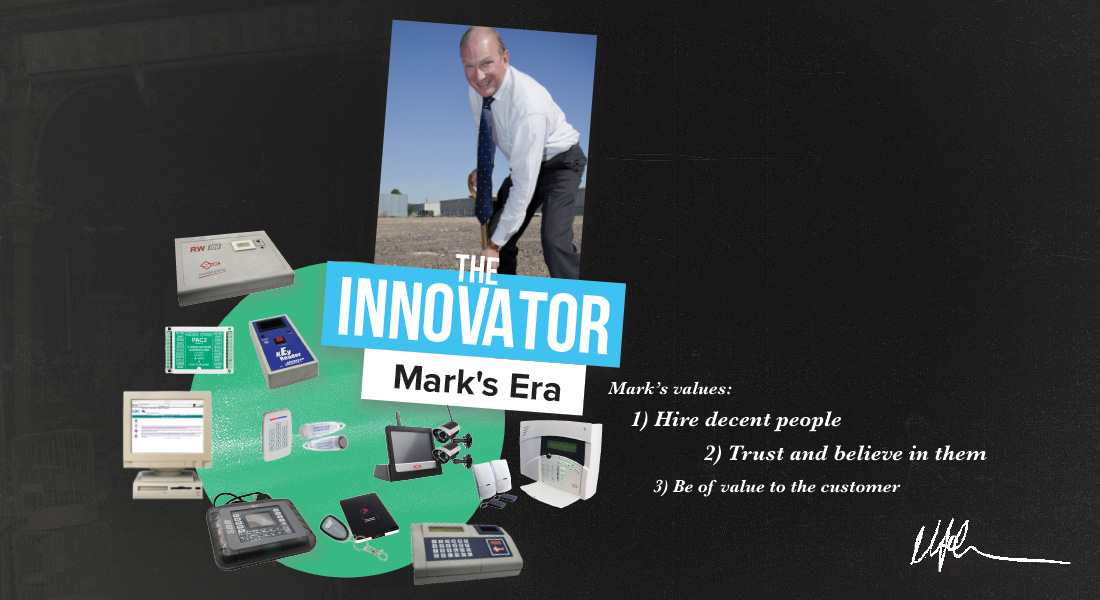
Within a few years, things started to ramp up, we were offering IEI locks and keypads. We offered the Keri Systems “Intelliprox 2000” single door controllers with 500 users, and the CS-Technologies stand-alone ‘plug-and-play’ controllers with Dallas “i-button” credentials. Locksmiths liked them because they incorporated an installer code, allowing them to offer a similar level of security around replacement credentials to what they were used to with mechanical key systems.
We sold PAC1 controllers from local company NIDAC. Locally designed and made, it was innovative and ahead of its time.
We started offering training, and although it was ad-hoc at first, our sessions at roadshows were incredibly popular. Locksmiths were hungry for the next big thing, they wanted to see how they could keep their businesses vibrant and relevant in the years ahead.
The internet continued to transform how we did things, and although it seems very commonplace today, booking flights and hotels, or using the internet for banking, or online shopping were all very new.
LSC had an early web presence, and we (like many companies) had a decent online catalogue. The ability to log in, get pricing and make orders was a few years away, but it was all in place towards the end of the decade.
The locksmiths that blended a mix of electronic security into their offering flourished. But traditional products including padlocks, cylinders, mortice locks, keys, and master key systems remained mainstays.
The middle 2000’s were a great period for the industry. Businesses offered MK systems designed by ProMaster (through the versions from 3 to 5), cut their keys with Silca Unocode 299 machines, stamped their keys with Silca Marker2000 machines and installed cylinders by the 10,000’s
By the end of the decade, we were ready for another big new chapter. 
Mark Johnson